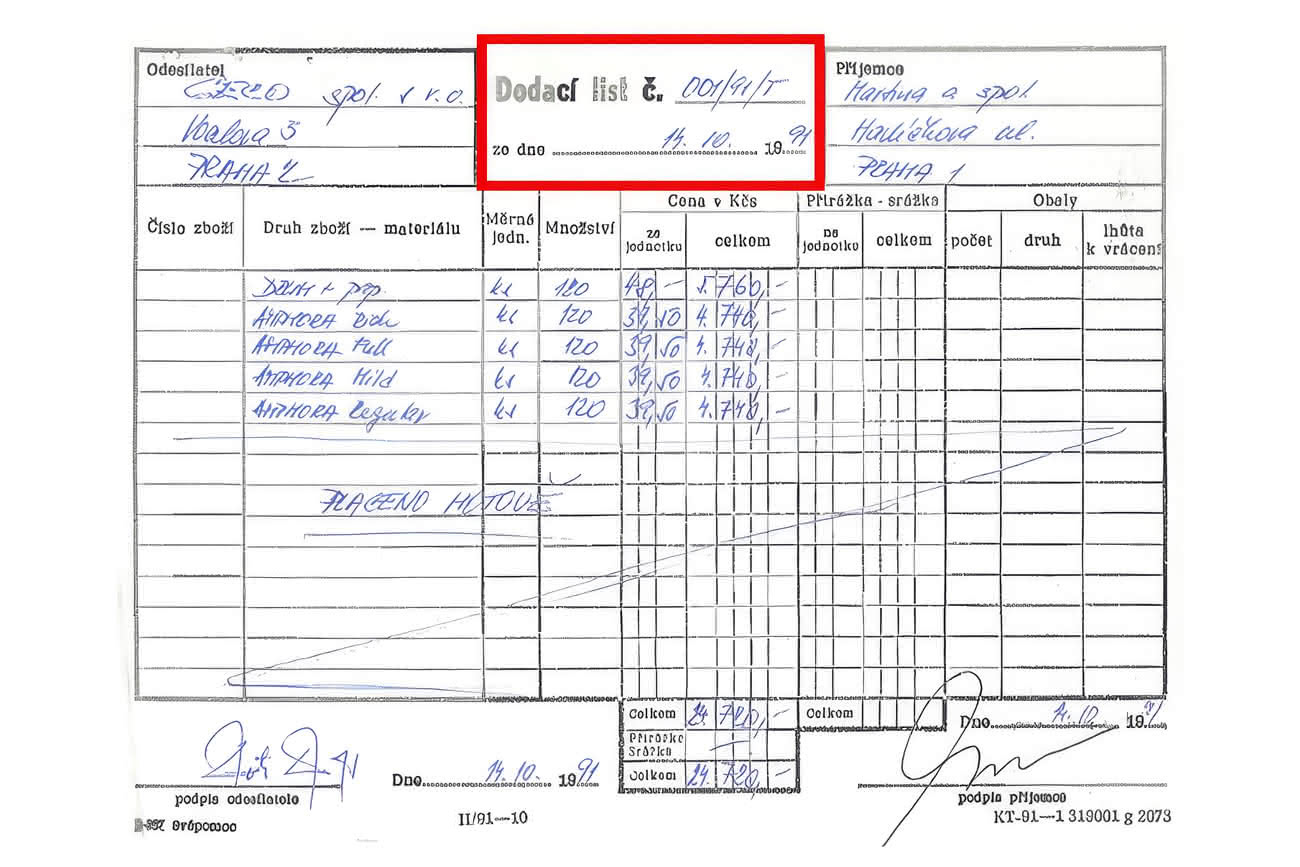
When you brought your first goods back from the Netherlands in 1991, did you know you were starting a company?
We knew we wanted to go into business. We were university classmates, a completely new world had opened up, we were full of ideas and energy, and we saw an opportunity. We brought back our first goods and started trading. We opened our first store in České Budějovice in February 1992, and our first wholesale operation was in Karlín in Prague. More stores followed, the range expanded, and we added warehouses, vehicles and employees. We entered Slovakia in 2000 and Germany ten years later. Today, you can draw it all as a neat timeline. In reality, of course, it was never that simple.
So what was the decisive moment?
There wasn’t one. That is perhaps the biggest distortion in stories about successful companies. Looking back, people search for the brilliant idea or the one decision that started everything. I see thousands of decisions instead. Some good, some bad. What matters is recognising a mistake and correcting it. And when something works, not automatically assuming it will work forever. Opportunity, an idea and a bit of luck may help you at the beginning. But they will not carry you for 35 years.
GECO’s Czech business now has a turnover of nearly CZK 60 billion. That is a genuinely large company. What does size mean to you?
From a human perspective, above all responsibility. From a business perspective, a different way of managing.
With ten people, you can manage a great deal personally. You know everyone, you know what they do, what they are good at and where they need support. When you have a large store network, wholesale operations, distribution, several layers of management and international business partners, one human brain simply cannot take everything in.
But size itself is not success. You can be a large, badly managed company. What matters more to me is whether we can keep improving as we grow. Large companies tend to become slower. That is the danger.
A small company has to change or it will not survive. A successful large company has plenty of evidence that what it is doing is right. A process becomes a rule, the rule becomes a habit, and the habit becomes almost sacred. People start saying, ‘This is how we’ve always done it, and it works.’ But customers do not care how long you have been doing something. Every day, they compare you with the competition – and not only with your direct competitors. They compare you with the way companies in completely different industries communicate with them and treat them.
Success is enjoyable, but dangerous. It gives you a reason not to change.
GECO, by contrast, sees itself as a company that helps shape its market and the wider environment it shares with customers and business partners – a company that sets the direction in its field.
We have always wanted to bring in new things before our competitors: new products and services, a loyalty programme that actually makes sense, technology in our stores, knowledgeable and enthusiastic staff. Shopping with us should be an enjoyable experience. We do not want to wait until something becomes standard and only then introduce it ourselves.
But making changes in a constantly changing world also brings risk. And it puts a lot of pressure on employees.
Of course not every innovation works. That is part of it. If you only want to innovate when you know in advance that you will succeed, you will never innovate. And innovation, to me, is not only what the customer sees. Perhaps even more important are the innovations inside the company – how we work, how we assess results, how we manage people. That matters if people are to understand change and believe in it. Because standing still creates far more pressure than moving forward. I think that is something we have learned at GECO over the past 35 years.
That sounds complex and demanding, yet your vision is very simply stated.
We want to be the leading retailer in our field and the best partner for our customers, employees and suppliers. You will find a similar sentence on plenty of company websites. We try to use ours when we actually make decisions. A vision that does not change your everyday behaviour is not a vision. It is just a sentence on the wall.
How can you tell the difference?
In concrete things. We want to give customers the best service available, we have a straightforward loyalty programme, and we try to introduce new products and services before others do.
For employees, it means above-average pay, training, clearly defined roles and a focus on performance, but also fair treatment and transparent evaluation.
And we promise suppliers only what we know we can deliver. I would use an old merchant’s word here: reliability. According to our records, throughout the company’s entire history we have never paid the state, a bank, a supplier or an employee late. Paying a tax, a loan instalment, an invoice or a salary on time a few times is not a company value. Doing it for 35 years says something about the way you do business.
When you talk about employees, you use the words fairness and competitiveness at the same time. Many companies would see them as almost contradictory.
I do not. We are a results-oriented company. We want people to be good at what they do, to improve and to have a healthy sense of competition.
But competition is only fair when everyone knows the rules.
If you expect high performance from people, you also have a duty to pay them well, train them and give them good working conditions. You should be able to answer honestly, at any time, when they ask how they are doing. I consider it poor management when someone spends six months not knowing what their manager thinks of their work and then suddenly finds out that something is wrong.
And this is where INFINA comes into the story?
Yes. We have been developing it since 2019, based precisely on our own experience and needs.
A large company generates huge amounts of data. The problem is not a lack of information. The problem is that it sits in dozens of different systems, applications and spreadsheets. Everyone then ends up looking at a slightly different version of the company. We wanted one place where information about our operations and employees would be available, so that we could all work from the same data. We all see the same picture.
Today, INFINA brings together data on results, productivity, attendance, evaluations, training, remuneration and many other areas. For stores, it contains operational information, inspections, stocktakes, technical data and documentation. It helps plan shifts efficiently while respecting labour-law requirements, and it tracks certain insurance conditions, access chips, internal mail and even company clothing. But none of that is the most important part.
So what is the most important part?
The system does not just show you data. It helps you manage.
Managers at every level of the company have the reports relevant to them. They can rank practically any performance measure from worst to best, or quickly see whether a monitored task is overdue.
That means a manager does not have to start the morning wondering where a problem might be.
They can see it. The weakest result says: start here. This is the person, place or problem that needs your attention first. Find out why, then fix it or improve it. Because when you improve the weakest parts of a team, you move the whole team forward. And the manager grows with it.
And what about the best performers?
They see those too, of course. And that is just as important. A manager should not focus only on problems. If you want to be the best, you need to understand the people at the front of the pack. You should see who is doing best, praise them, recognise them and use them as an example for others. Find out why they are the best and help the rest of the team learn from it.
How up-to-date is the data managers see?
At most one day old. That is crucial. I do not want a beautiful report at the end of the month telling me about a problem that started three weeks ago. I want the person responsible to know as soon as possible that something is happening.
Everyone sees the data appropriate to their level. Employees see their own results, team leaders see their teams, and the next level of management sees its area, region or wholesale branch.
A lot of companies today say they are data-driven.
Yes. There is a great deal of talk today about data, transparency, digitalisation and real-time management. But I do not know another company that has actually embedded a comparable management tool, on this scale and at this level of detail, into everyday management. INFINA is part of our daily work. It is not something reserved for IT specialists or one particular level of management.
Isn’t that a little bit Big Brother?
No. Because it brings fairness, transparency and openness to the way we communicate and make decisions. Whenever you assess a system, it is useful to compare it with the real alternatives. So let’s describe the alternative.
One manager is stricter, another more lenient. A manager gets on well personally with one employee and less well with another. One person thinks they are doing an excellent job; their boss thinks otherwise. Who is right? Data obviously does not know everything about a person, and we do not want it to. But where something can be measured objectively, I believe data reduces the room for arbitrary judgement. Employees can see their own data too.
That matters. The company is not keeping a secret spreadsheet about them. They know how they are being assessed and where they stand.
So can this technology really make a company fairer when it comes to pay and assessing individuals and teams?
It can help. Technology itself is neither fair nor unfair. It depends on how you use it – and, above all, how openly and for what purpose. INFINA does not replace the manager. If the system shows that someone has been underperforming for a long time, it does not tell you why. Their manager has to find that out. They have to talk to the person, understand the cause and help them improve. Technology does not tell you how to manage a human being
It gives you a basis for comparison. And, above all, it makes it much harder to ignore a problem.
Fair enough, but not everything can be expressed in numbers.
I agree. One interesting measure is employee turnover. In the past, turnover in GECO retail was around 80 per cent. Today it is below 30 per cent. In wholesale, it is around 10 per cent, and at head office it has been close to zero for a long time. That tells us people want to work here. And that decision is always the result of many factors, not only those that can be captured in data or explained purely rationally. What I mean is that our approach is broader than the numbers. I may be repeating myself, but data helps us manage people more fairly.
We have people who have worked with us for ten, twenty or thirty years. That matters to me. People vote on their employer in a very practical way: by staying. At the same time, I do not promise an easy job. Nor do I want to. GECO is a fair company.
People want to succeed. They want to know their work has value and that when they do a good job, somebody notices. I do not believe you build a good company by lowering expectations.
The job of top management is to create an environment where the rules are clear and both good and poor performance can be recognised. Then it depends on the employee, not on the whims of the boss.
Innovation does not have to mean technology. Some years ago, you completely changed GECO’s visual identity and found inspiration in Piet Mondrian. That is not an obvious reference point for a fast-moving consumer goods retailer.
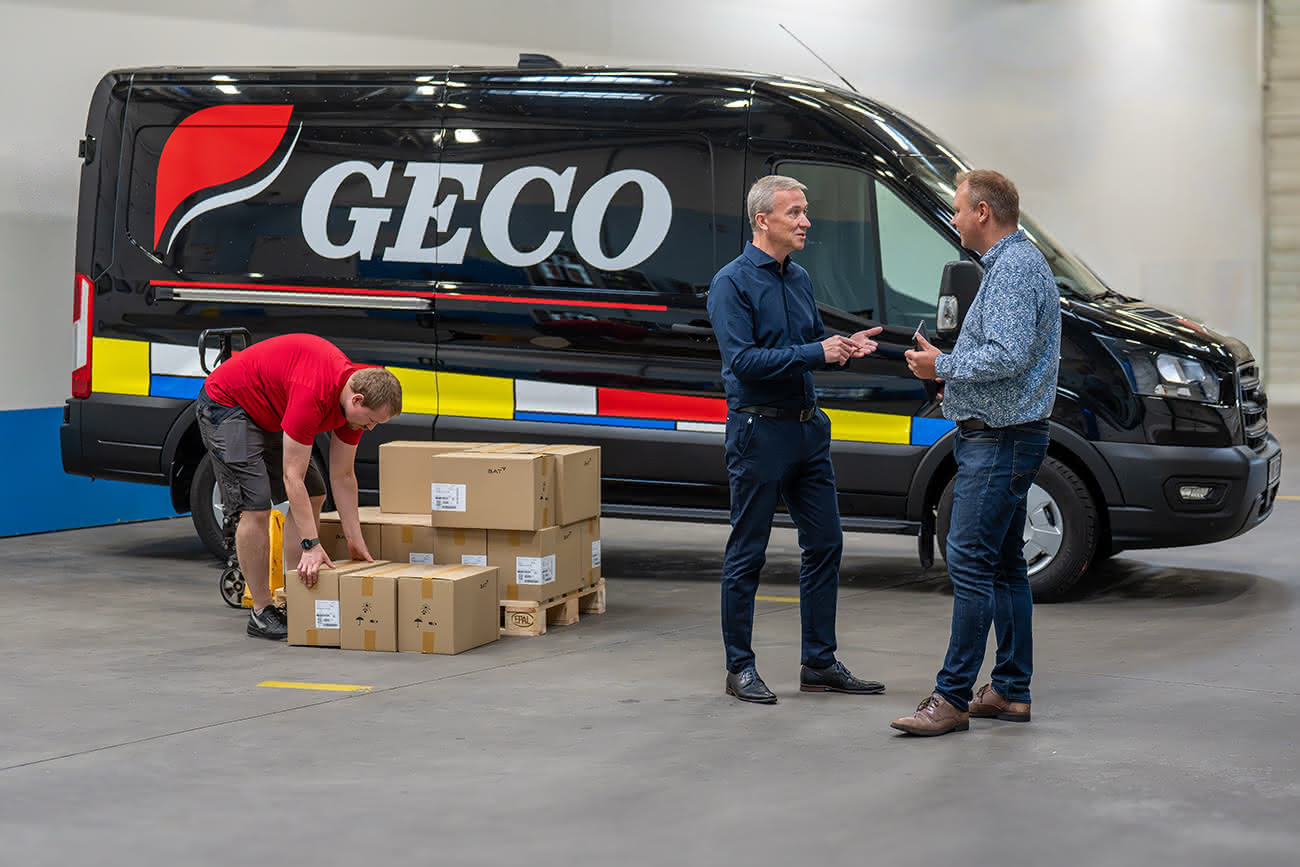
Mondrian managed to create something instantly recognisable from just a few simple elements – lines, shapes and colours. We wanted the same thing: for people to recognise GECO immediately.
There is something else I like about that inspiration. Piet Mondrian died in 1944, yet his visual language still feels modern more than 80 years later. It is not a monument to the past, but something like a guide through time, from the past towards the future. That openness to different variations fascinates me.
That openness to new ideas keeps coming up in our conversation. Taken to its logical conclusion, is it difficult for a founder to accept that one day GECO might be better without its founders?
If, after 35 years, everything stops the moment the founder does not come into the office, then they have not built a company. They have created a very demanding job for themselves. A company needs its own know-how and people with the courage and ability to make decisions.
A founder’s job is not to make themselves the person without whom nothing works. Their job is to build something with deeper roots than tradition alone. If I can use a sporting analogy, I am running one leg of a relay.
So after 35 years, what is your role?
To keep looking for what we can do better. That does not change as the company grows. If anything, it becomes more important. The bigger and more successful you become, the more reasons you have to convince yourself that you no longer need to change anything.
And that, in my view, is where the problem begins. The past is useful as experience. Never as a manual.
An anniversary inevitably makes you look back. What are you most proud of?
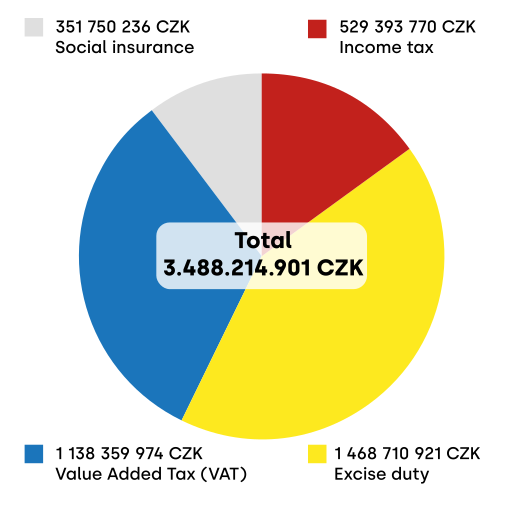
The company as a whole. The fact that one business trip grew into a large company that employs so many people – in some cases entire families – and contributes significant sums to the state budget, operates in three countries and, from what we know, has no truly comparable counterpart in its field, at least in Europe.
But above all, I am proud that it keeps changing. You can open more stores, increase turnover and say you are bigger. It is much harder, after 35 years, to say that you are also a better company than you were five years ago.
Looking ahead, what do you see as the biggest risk for GECO today?
An unstable legislative environment and increasingly arbitrary behaviour by public authorities. Before Covid, I did not see this as a threat to our business to anything like the same extent. Today, I do.
A business can deal with competition. It can respond to changes in customer behaviour, new technologies or its own mistakes. It is much harder to run a company in an environment where you do not know what the rules will be in a year or two.
What concerns you most about that? Regulation itself?
No. Our industry needs regulation and always will. The problem is unpredictability and irrational decision-making without an understanding of the real-world consequences.
If you burden a legal product with further restrictions to the point where customers are pushed towards the black market, you have solved nothing. You have simply lost control over what they buy and who sells it to them, while the state also loses tax revenue.
The state obviously has the right to change the rules. But just as we expect our managers to make decisions based on data and to understand the consequences of those decisions, I would expect the same from public authorities.
So where will GECO be in another ten years?
I don’t know. And I would be wary of anyone who can tell you exactly what any company will look like in 2036.
We do not know how technology, customer behaviour and preferences, regulation, retail itself or the world as a whole will change. What once took a generation now has to be accomplished in a few years. What we once had years to do, we now have months.
But we do know what kind of company we want to be. We want to be the leading retailer in our field and the best partner for our customers, employees and suppliers. The means will change. The principles and goals of our business will not.